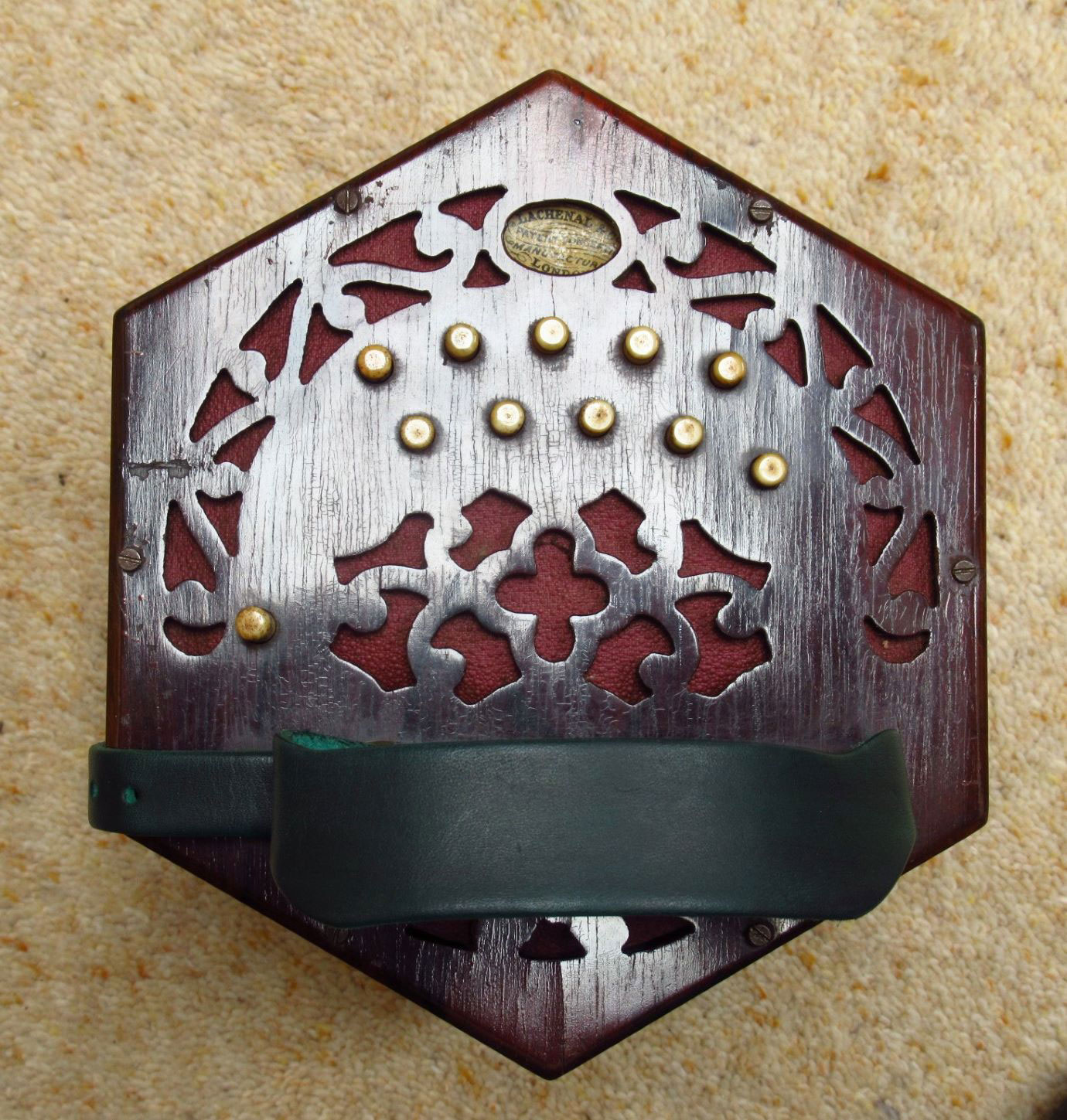
Restoration of an old concertina
During 2020 - 2021, the Squire, Andrew Mills acquired and restored an old concertina. This is the story of how he did it …
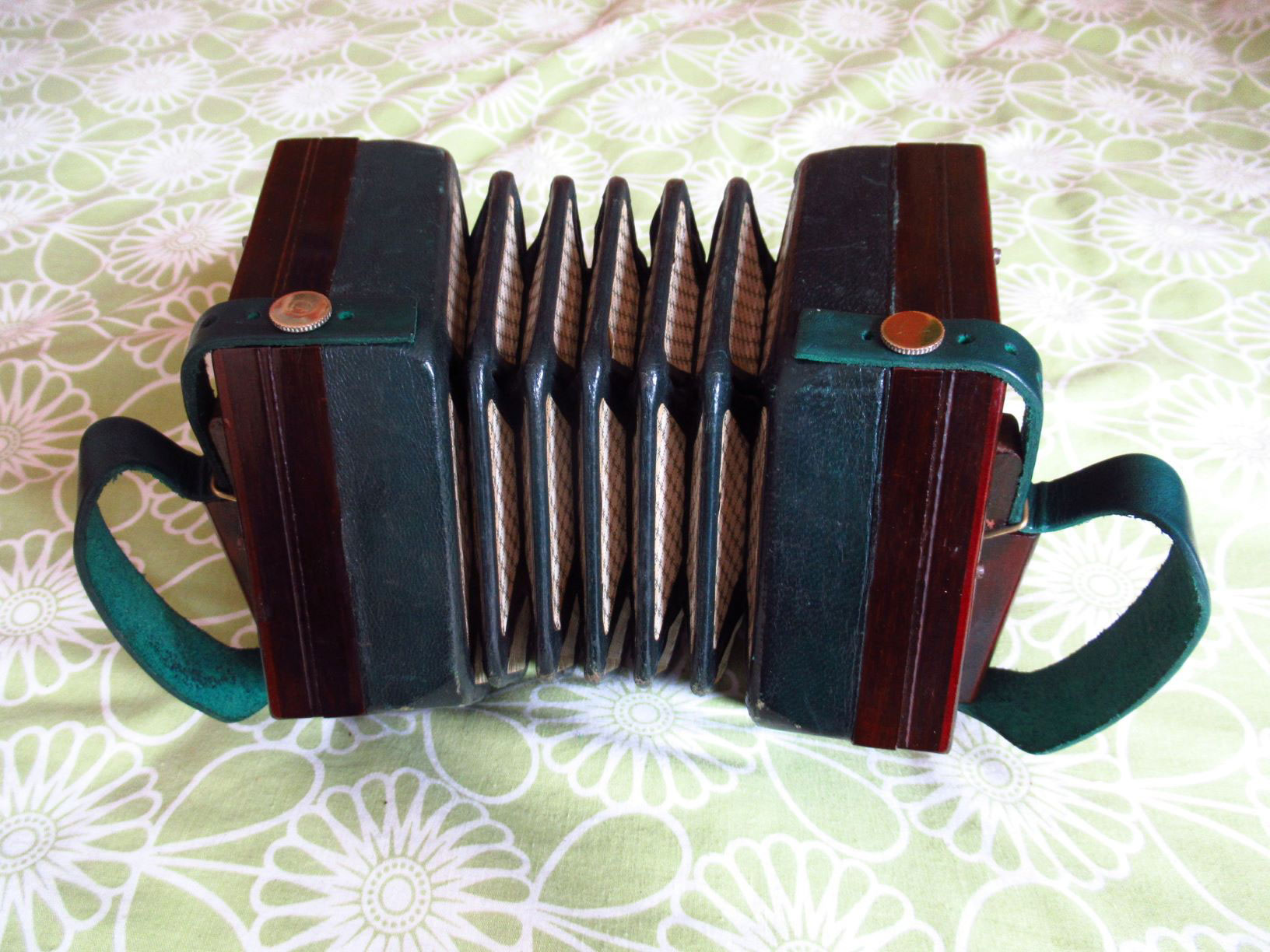
Some of you may know that the webmaster's partner Judy Burrage gave me a concertina a couple of years back that belonged to her father Paul Skelton who had acquired it at some time during his 35 years in the merchant marine. It was a twenty key C/G Lachenal & Co with a serial number 115673 which dates its manufacture to around 1920 but certainly before 1926 because there is a documented reference to an instrument with the serial number 196865 sold in that year. The company changed to 'Erin' buttons (an early type of plastic) in the late 20's and as Judy's instrument has bone buttons, this reinforces an earlier date for its manufacture. It could have been made before 1920 but we can only say with confidence that it is around a 100 years old.
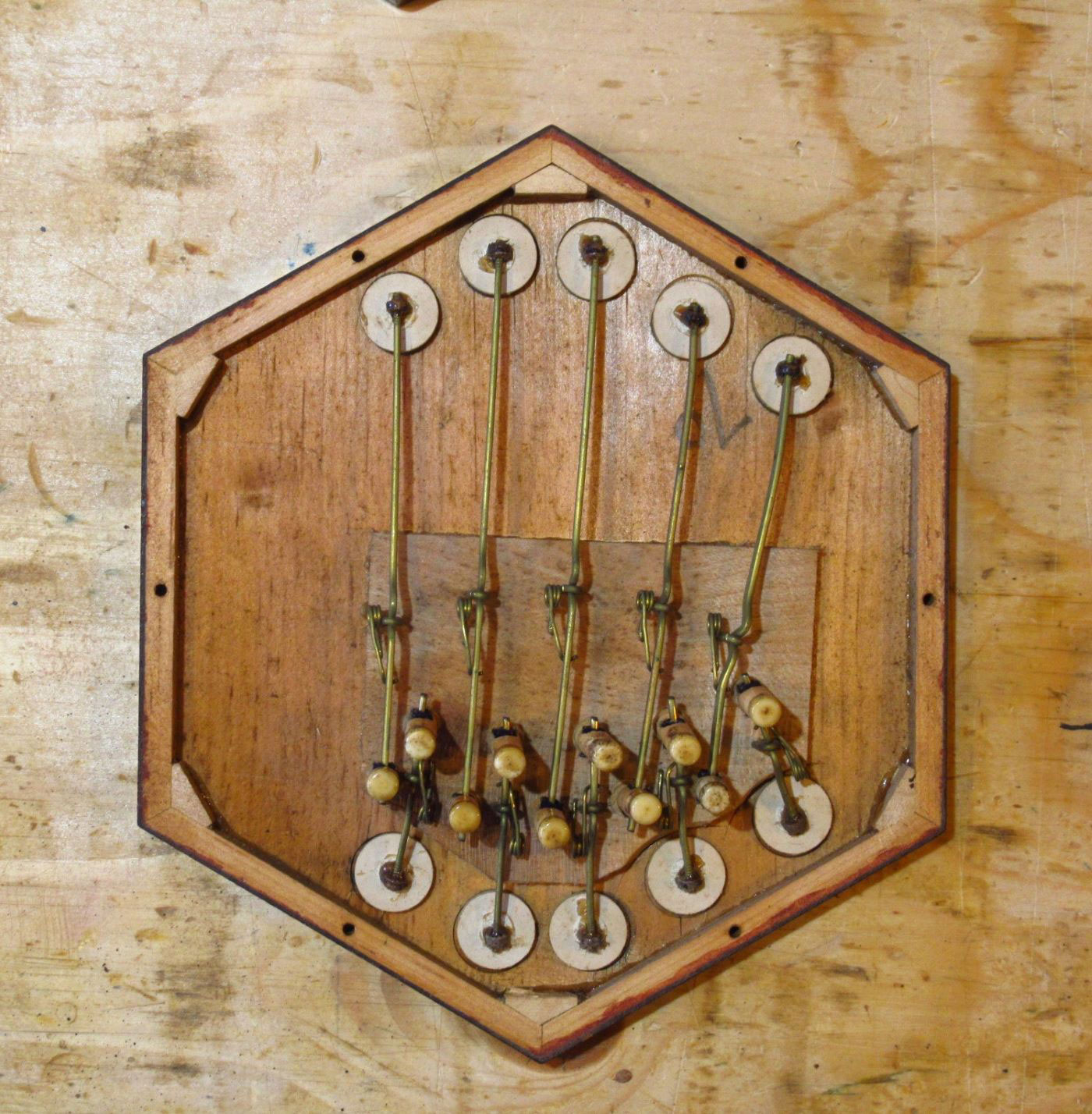
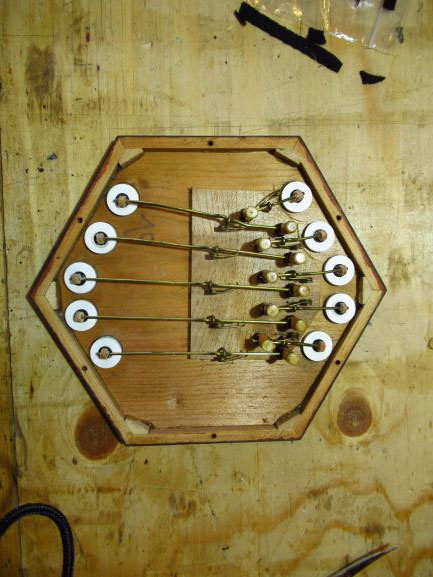
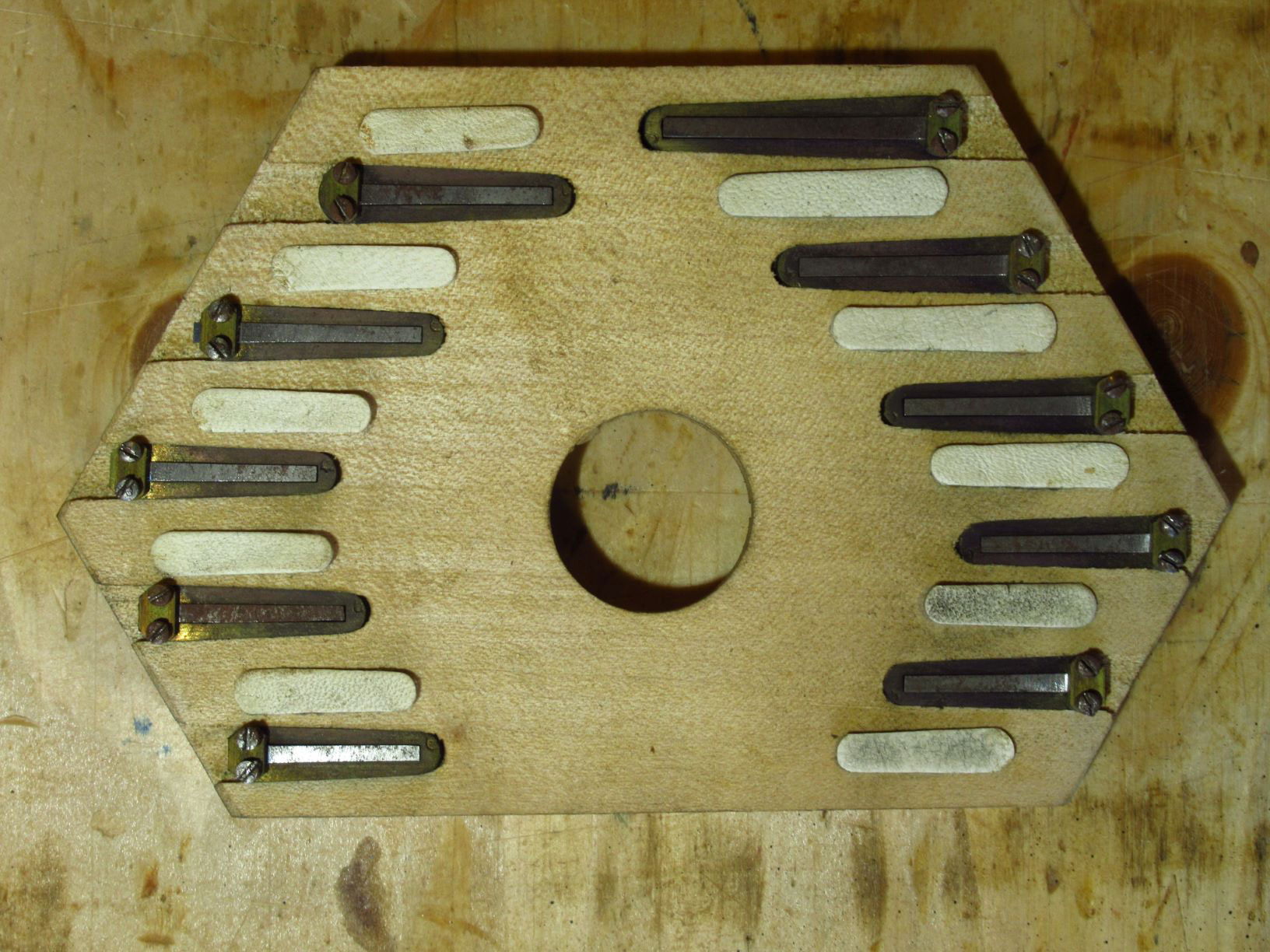
The instrument was playable when passed to me but clearly in need of restoration. The bellows amazingly showed no signs of leaking which is always a good sign as they are quite expensive and technically the most difficult part to replace. One of the interesting aspects of these instruments is that you can still buy all the moving parts to repair them so it is within the scope of someone with a degree of technical ability to work on them. Unfortunately, the labour aspect of their restoration means that the cost of refurbishing an instrument if it was done professionally is greater than the current purchase price for a playable instrument of the same type and age. This means there must be lots of decent but unplayable instruments like this one languishing in lofts across the country. With this instrument I was able to replace all the internal parts but keep the external signs of its past and patina which is always a nice thing to do.
Judy's instrument would have been at the very lowest end of Lachenal's price range when new and you read modern references to this model as 'common' or 'ordinary' but when you open them up the degree of skill and handwork required to make them is pretty impressive for such a simple design. Unfortunately, whoever finally assembled this one dropped the reed pan on the workshop floor at the last moment and there is a hasty and, I hope at the time, a very guilty repair job on one side of a reed pan chamber where it has been snapped off. A Friday afternoon job!
Looking at the wear on this instrument you can tell that it was well played on a very regular basis but had been looked after reasonably carefully, so I'm guessing that it has been a much loved instrument at times during its past. The build up of soot on the pads and valves of the most used notes was terrifying. It was not being played politely in the front parlour but somewhere filled with cigarette smoke and with a smoky coal fire - so guessing again, this was probably the public bar in the local pub or perhaps even bars across the world as it travelled the oceans.
It was disappointing not to find any reference to the previous owners inside the machine. There were no messages, names or signatures. Everyone writes their name and address in their instrument these days just in case it gets nicked but as concertinas seem to be stolen regularly I'm not sure how this really helps. However, there is the name 'Jas Redfern' in the lid of its box written in old fashioned copperplate handwriting. So I am speculating that Jas must have been one of its earliest owners if not the first.
The instrument now plays as new, there is some corrosion on the outer side of the reeds but to my ear they still sound roughly in tune. Using an electronic tuner I can see that some notes are slightly flat or sharp but they have probably been like that since new as tuning was originally done with a large file and by ear. Because the reeds are steel the sound is bright and loud enough to play Morris on its own or together with a violin and whistle but it would be easily drowned out by a melodeon. Nevertheless, I will bring it to Morris practice at the end of the season.
I have restored another almost identical C/G Lachenal with serial number 33165. This instrument was made by Wheatstone after they had bought out Lachenal during the Great Depression using the latter's redundant stock. The earliest documented serial number for these instruments is 33053 dated September 1933. Left in a puddle of beer this one required a complete rebuild.